Gigi Mariani
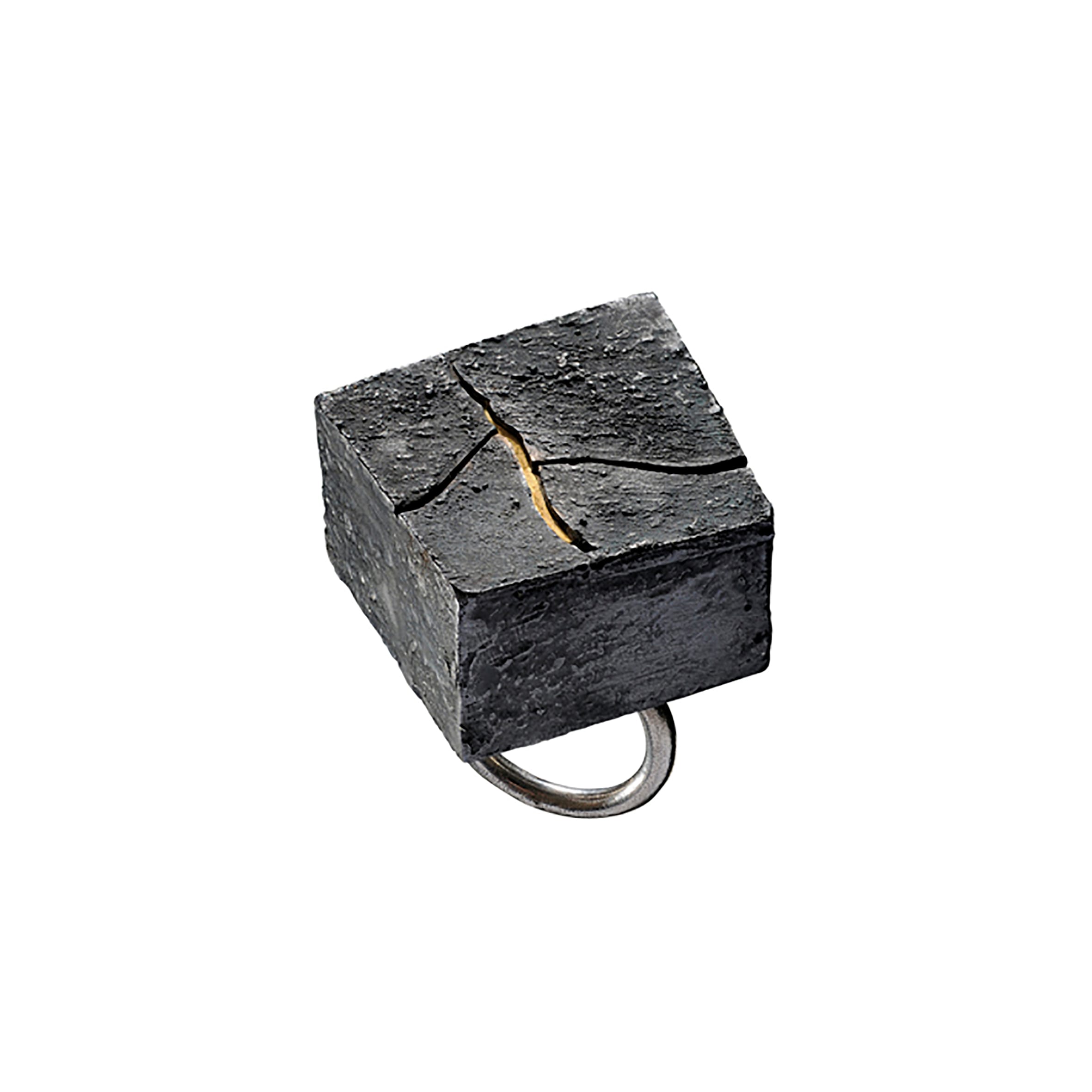
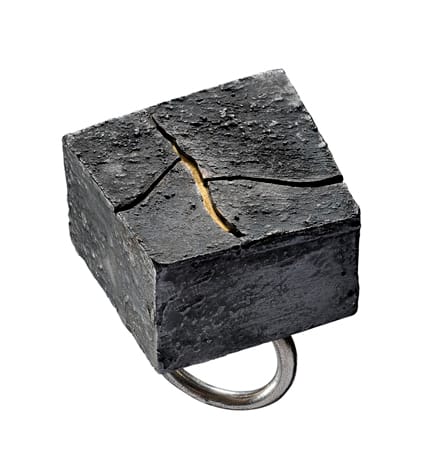
Cracks
Short CV
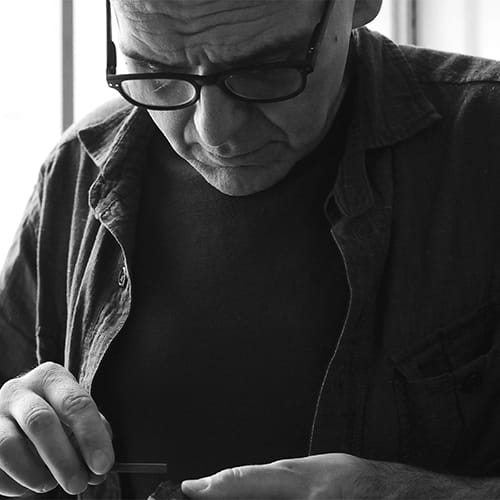
Born in Modena (Italy) in 1957, Gigi Mariani opened his own studio in 1985 after a two-year apprenticeship in a goldsmith’s workshop. Since 2009 he attended several seminar workshops on goldsmith’s techniques and from 2012 onward his presence in the field of contemporary jewellery counted several exhibitions and awards. The dense consistency of his black surfaces as well as his “painterly style” reached attention at international fairs and exhibitions. His works are represented by several art jewellery galleries in Europe and America. He lives and works in Modena.
Statement
Gigi Mariani is a jeweller artist whose body of works is mainly known for his “painterly” use of niello. This metallic alloy -used for centuries by goldsmiths- reached in Mariani’s works a new degree of research and application. Pushing the effects and the nature of niello to their limits, this ancient technique provided the artist with a new field of research and inventiveness. Over the years, a dense, thick black surface became the signature of his body of works and the surfaces were worked in a pictorial way. Some of them were broken by cracks; some were suffering from scars and holes, and on other ones, ancestral traces emerged from the black matter.
Together with niello, the use of gold has always been the ideal counterpoint to the dense, thick consistency of the black matter. Gold, as well as scratches and wounds, surfaced through sparkles or portions on the pieces giving to Mariani’s body of work his individual and distinguished cifra stilistica.
Over the years, with the size of his works reduced, gold emerged consistently in accordance with a principle of reduction: where -at the beginning- the light was modulated over the matter of niello or enamel, now new glares shimmer on the gold surfaces. Thus, on the clean perimeter of the pieces, tiny, mobile elements enrich the surfaces and light plays with sophisticated volumes and movements.
(Nichka Marobin, art historian)