
For Artissima 2025 Ncontemporary presents a dialogue between the works of Maria D. Rapicavoli (1976, Italy), Walter Niedermayr (1952, Italy), Santiago Reyes Villaveces (1986, Colombia), and the designer/architect duo EX. Through different interpretative approaches and critical perspectives, the selected artists explore sociopolitical themes related to the relationship between humans and the environment, ecology, and the perception of space.
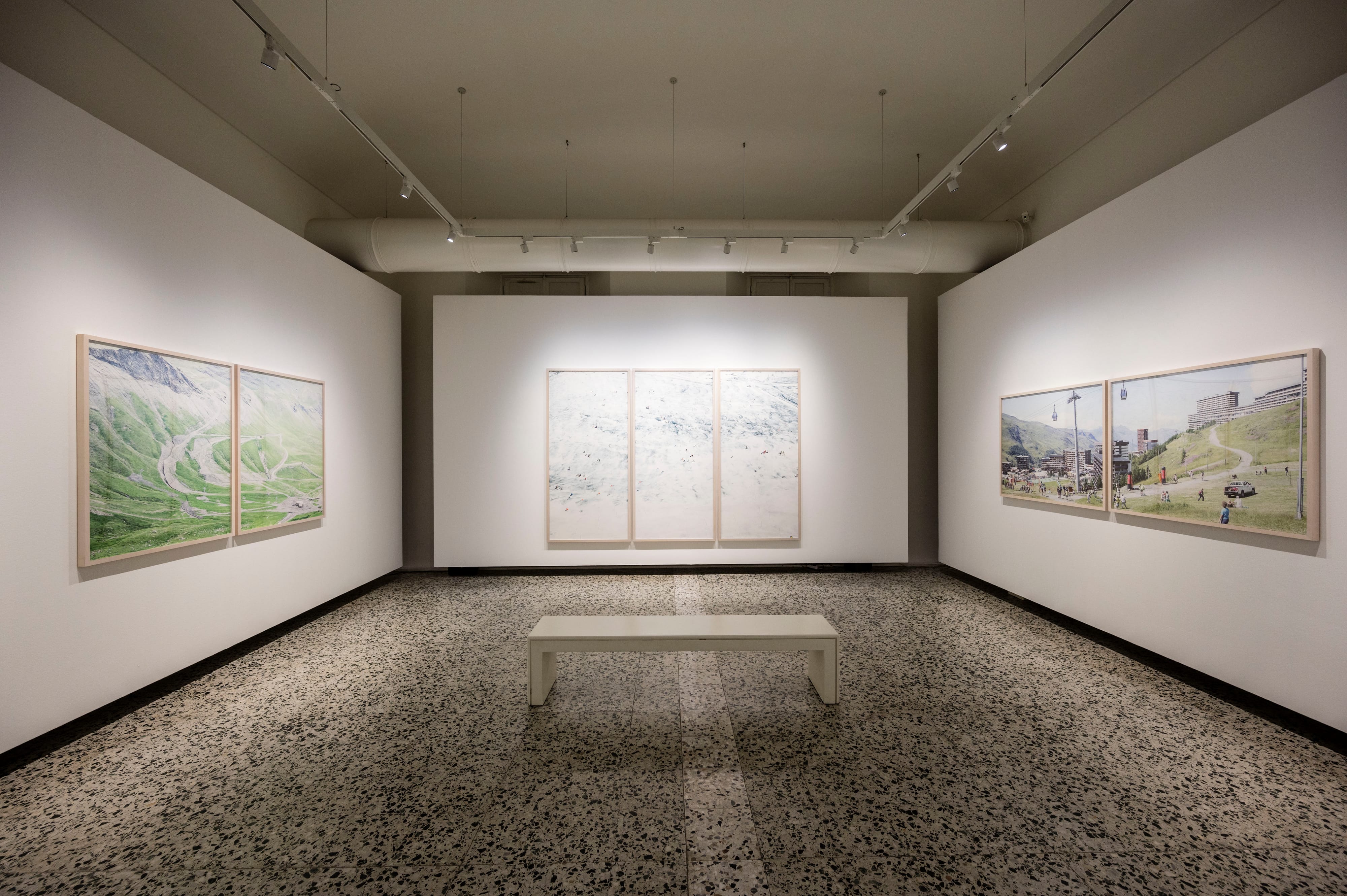
Walter Niedermayr’s Alpine Landscapes series captures the Alpine scenery in both winter and summer, highlighting the permanent impact of the human actions on nature. The photographs manage to capture all the beauty of the landscape, of the glacial areas and high mountain regions, but they also depict a landscape punctuated by small human figures. For over thirty years, in fact, Niedermayr has been pursuing his study in parallel regarding climate change in
these mountainous areas and the leisure and tourism industry as opposed to sustainable use of the environment. If Maria D. Rapicavoli starts from a personal experience, intertwining it with an analysis of global economic and political systems, Walter Niedermayr similarly narrates a landscape that is familiar to him, one that has been part of his life. However, the calm, brightness, and lightness of certain images challenges our perception of a given space. Through their ambiguity, the photos go beyond the typical uniformity of place and time and in a literal sense expand the “horizon” of perception.
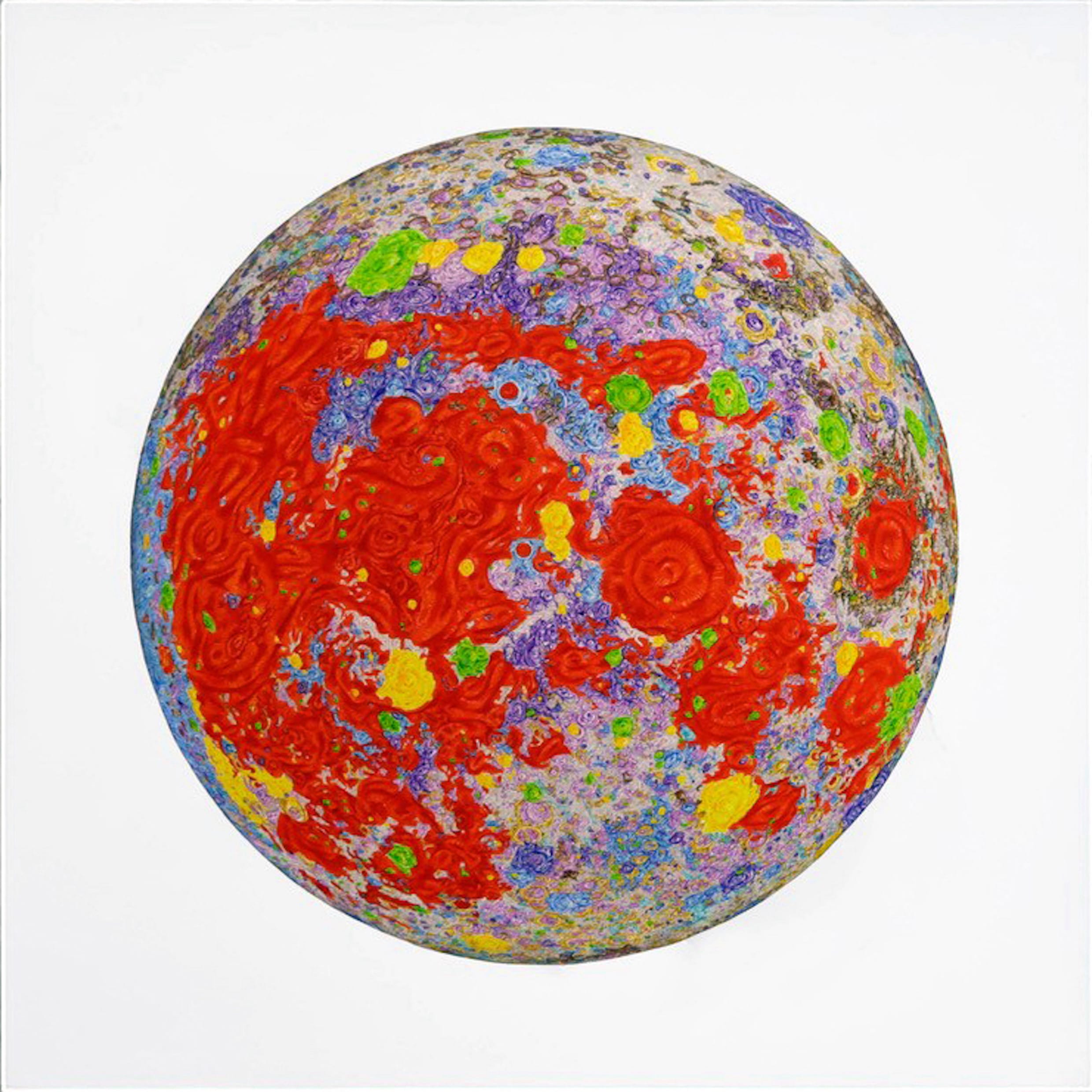
In fact, the works from the series Luna (2021-ongoing) are replicas of the first detailed geological map of the Moon, published by NASA in 2019, in which metals present on the satellite are indicated with different colours. Despite the vivid, intense colors of the image, Villaveces aims to highlight the urgent need to question the extractive economy being implemented in outer space. Once again, the message is hidden behind the fascination of the image. A large work from the series Luna was exhibited in 2025 at Frieze New York, while the artist held his latest solo show in early 2025 in Bogotà, titled El Hueco.